



High School Study Abroad: A Complete Guide for Students and Parents
Sending your child to study abroad during high school is one of the most significant decisions a family can make. It represents an investment not just in education, but in your child's future. As international education becomes increasingly accessible and valued, more families are exploring high school study abroad opportunities earlier in their children's academic journey.
This comprehensive 2026 guide, written by James Ramsdell, an experienced educator and former director of admission, draws on his perspective as someone who works closely with both interested international families and the schools themselves. The following insights will walk you through everything you need to know about high school study abroad programs, from understanding the basics to navigating the application process. Whether you're just beginning to explore options or are ready to make a decision, this resource will help you and your student make informed choices about this life-changing opportunity.

Source: Darlington School
What Is High School Study Abroad?
High school study abroad refers to educational programs where students leave their home country to complete part or all of their secondary education at a school in another country. Unlike short-term exchange programs or summer camps, study abroad during high school typically involves enrolling as a full-time student at an international school for an extended period, ranging from one semester to completing the entire high school curriculum (grades 9-12 or equivalent).

Source: The Governor’s Academy
If you’re also considering shorter experiences, check out our guide to summer abroad programs for high schoolers, which can be a great option for introducing your child to international education before committing to a full-time program.
How High School Study Abroad Differs from University Programs
While both high school and university study abroad involve international education, there are important distinctions. High school students typically enroll in structured boarding school environments or homestay programs with comprehensive supervision and support systems designed for younger students. The experience is more immersive during these crucial developmental years, when students are still building their identity and academic foundation.
University study abroad programs, by contrast, often involve semester or year-long exchanges where students remain enrolled at their home institution. High school study abroad usually means transferring to a new school entirely, earning your diploma from that international institution.
Program Features
Most high school study abroad experiences include structured academic programs with college preparatory curricula, comprehensive residential life with dormitories or carefully vetted host families, dedicated student support services including academic advisors and counselors, extracurricular activities ranging from sports to arts to leadership programs, and pastoral care systems designed specifically for international students.
You can read more about how US private high schools support international students, including academic and emotional resources, in our detailed post here.
Why Do Students Choose High School Study Abroad?
Families choose high school study abroad for various compelling reasons, each reflecting their unique goals and values for their child's education and future. Below are a few main reasons:
Academic Excellence and English Language Mastery
Many international boarding schools offer rigorous academic programs, including Advanced Placement (AP) courses, International Baccalaureate (IB) programs, and specialized curricula that may not be available in students' home countries. For non-native English speakers, full immersion in an English-speaking academic environment accelerates language acquisition far beyond what classroom instruction alone can achieve.
Personal Growth and Independence
The high school years are formative for developing independence, resilience, and self-confidence. Living away from home in a supportive but challenging environment helps students develop life skills including time management, problem-solving, cultural sensitivity, and adaptability. These qualities serve them throughout their lives, both personally and professionally.
Research from The Association of Boarding Schools (TABS) found that 78% of boarders reported they are motivated by peers compared to 49% of public school students, highlighting the unique peer environment in boarding schools.
Strategic Advantages for University and Beyond
Students who complete high school abroad, particularly in countries like the United States, UK, or Canada, often have distinct advantages when applying to top universities worldwide. They demonstrate maturity, global perspective, and the ability to thrive in diverse environments. Many also benefit from direct university counseling at their schools, established relationships between secondary schools and universities, familiarity with the university application systems in their host country, and a transcript that universities in that country easily understand and value.
According to research by TABS, boarding school students are more likely than private and public school students to earn an advanced degree and achieve faster career advancement.
Finding the Right Match
Platforms like FindingSchool serve as trusted resources for families navigating this important decision. With comprehensive profiles of thousands of schools across multiple countries, FindingSchool helps parents and students identify schools that align with their academic goals, values, and practical requirements. The platform's detailed information about curricula, admission requirements, costs, and school culture makes the complex process of school selection more manageable and informed.
“The FindingSchool profiles offer an inside’s guide to a school and community. There is a theme that 80% of all schools are the same. FindingSchool allows you to discover a school’s 20% and how your child will thrive in that environment" notes Ramsdell.
Benefits of High School Study Abroad
The advantages of high school study abroad extend across multiple dimensions of a student's development and future prospects.
Academic Rigor and Diverse Learning Opportunities
International schools, particularly boarding schools in countries like the United States and UK, often provide exceptional academic resources including small class sizes with individualized attention, state-of-the-art facilities and technology, diverse course offerings that allow students to explore varied interests, and experienced faculty who specialize in preparing international students for success.
Boarding school class sizes tend to be very small, the average being just 12 students, allowing teachers to provide individual attention and more accessible support.
The academic environment challenges students to think critically, engage in sophisticated discourse, and develop research skills that will serve them throughout their higher education.

Source: Chaminade Preparatory School
Cultural Immersion and Global Citizenship
Living and learning alongside students from dozens of countries creates a truly multicultural experience. Students don't just learn about different cultures in textbooks; they experience them daily through friendships, celebrations, discussions, and shared experiences. This immersion fosters genuine cultural competence, empathy, and the ability to navigate diverse social and professional environments with ease. According to TABS, international students make up about 15% of the population of their member schools, creating rich multicultural environments.
Language Development Beyond the Classroom
For students studying in English-speaking countries, language development happens organically through daily interactions, academic discussions, and social engagement. Students develop not just textbook English, but the idiomatic expressions, cultural references, and communication styles that mark true fluency. Many students also have opportunities to study additional languages, graduating with multilingual capabilities.
Preparation for Higher Education Success
Students who complete high school abroad arrive at university already accustomed to independent living, rigorous academics, and multicultural environments. This preparation means they can focus on their studies rather than struggling with the transition that many first-year university students face. They're familiar with academic expectations, know how to advocate for themselves, and have already developed effective study strategies.
Research shows that study abroad experiences have lasting career benefits. According to a 2017 study by the Institute of International Education (IIE), among alumni who studied abroad for one academic year, 68 percent reported studying abroad contributing to a job offer or promotion. Additionally, more than 31 million job openings require skills that a student acquires while studying abroad, according to NAFSA's 2020 research.
FindingSchool's extensive database showcases these benefits through real school profiles, student testimonials, and detailed information about each institution's academic programs and outcomes. Families can explore graduation statistics, university placement records, and authentic reviews from other international families who have experienced these schools firsthand.
Challenges and Considerations
While the benefits are substantial, it's important for families to thoughtfully consider the challenges that come with high school study abroad.
Emotional Adjustment and Homesickness
Separating from family during the formative teenage years is emotionally significant for both students and parents. Homesickness is common, especially in the first few months. Students may experience feelings of loneliness, culture shock, frustration with language barriers even if they studied English previously, and anxiety about fitting in with new peers.
Most schools provide robust support systems including resident advisors, counselors, and peer mentorship programs specifically to help students navigate these challenges. Regular communication with family, involvement in activities, and giving the adjustment period adequate time typically help students overcome initial homesickness.
Financial Investment and Planning
High school study abroad represents a significant financial commitment. According to data from EducationData.org, tuition at boarding schools typically falls between $60,000–$80,000 for full boarding. More specifically, five-day boarding costs about $55,425 per year, while seven-day boarding costs around $69,150 per year nationally. For the 2024-2025 school year, some of the most expensive boarding schools charge upwards of $80,835 annually (Aralia Education).
Additional costs include international travel, health insurance, school supplies and uniforms, personal expenses and activities, and visa and application fees.
Families should budget carefully and explore scholarship opportunities, financial aid programs (some schools offer need-based assistance to international students), and payment plans that some institutions provide. According to NAIS (National Association of Independent Schools), about 40 percent of boarding school students receive some form of financial assistance. The investment, while substantial, is in your child's future and should be weighed against the long-term academic and professional advantages.
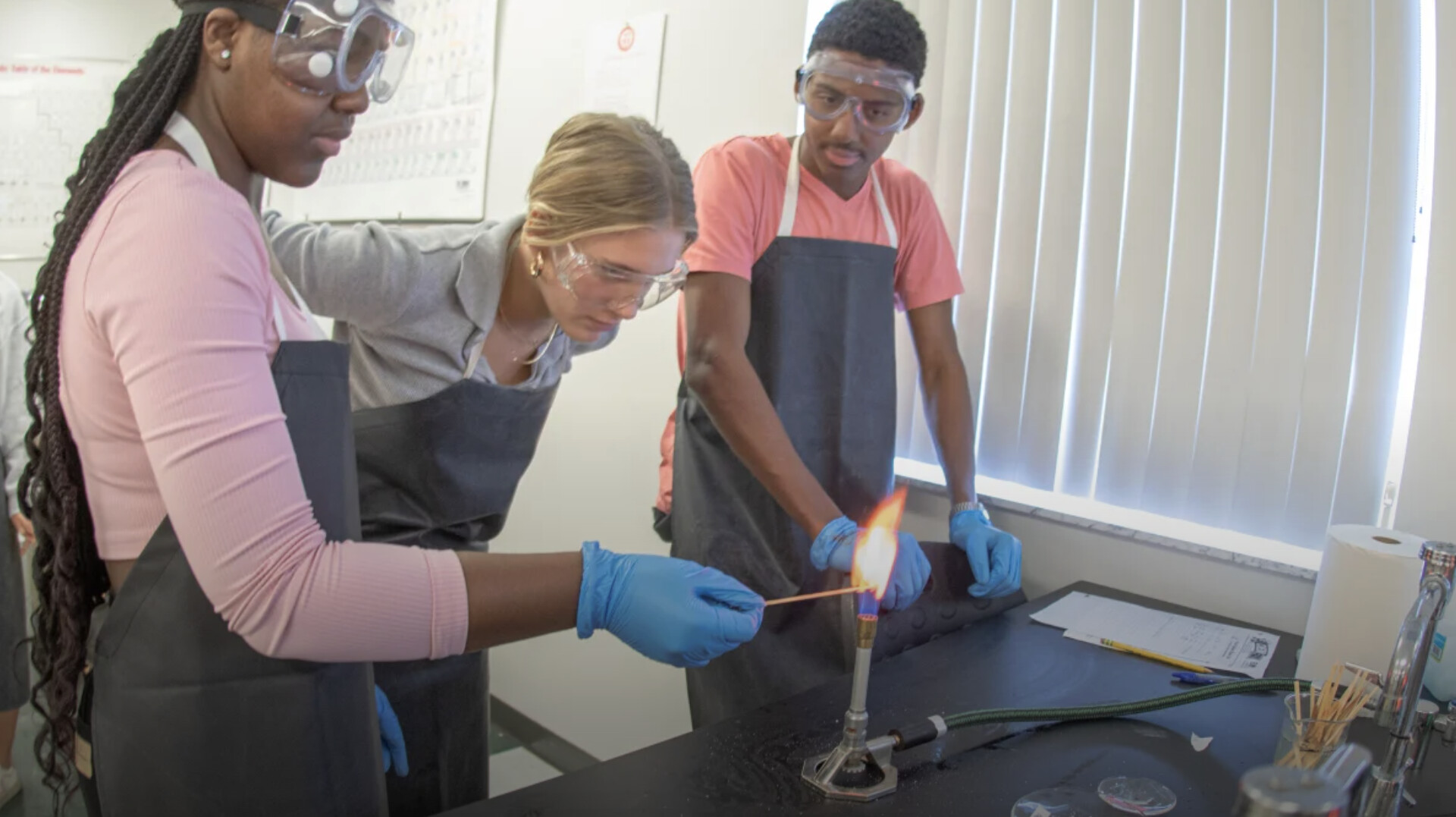
Source: Saint Andrew’s School (FL)
Navigating Admissions Requirements
Admission to competitive international schools can be rigorous. Requirements typically include academic transcripts demonstrating strong performance, English proficiency test scores such as TOEFL, IELTS, or Duolingo, standardized tests like the SSAT or ISEE for American schools, letters of recommendation from teachers or school administrators, personal essays and interviews, and sometimes additional assessments in math or other subjects.
The application process can span several months and requires careful attention to deadlines, documentation, and presentation. Many families benefit from working with educational consultants who specialize in international school placement, though others successfully navigate the process independently using resources and guidance from platforms like FindingSchool.
Parental Concerns About Safety and Well-Being
It's natural for parents to worry about their child's safety, health, and general well-being when they're far from home. Important considerations include understanding the school's safety protocols and supervision systems, arranging appropriate guardianship as required by schools and visa regulations, ensuring adequate health insurance coverage for international students, establishing communication protocols to stay connected while respecting your child's need for independence, and researching the safety of the surrounding community and campus.
Reputable schools prioritize student safety and provide 24/7 supervision, secure campuses, and clear protocols for emergencies. During your research phase, don't hesitate to ask detailed questions about these systems and speak with other international families about their experiences.
Popular Destinations for High School Study Abroad
Different countries offer distinct educational philosophies, cultural experiences, and practical advantages for international students. Below are a few of the top destinations:
United States
The United States hosts thousands of international high school students annually, particularly at boarding schools and private day schools. American education emphasizes well-rounded development, combining rigorous academics with extensive extracurricular activities including competitive sports programs, performing and visual arts, and leadership and community service opportunities.
The U.S. offers the Advanced Placement (AP) system, which allows students to earn university credit while still in high school, and a college counseling infrastructure at most schools that specifically guides students through American university applications. The country's diverse geography means families can choose from schools in various settings, from New England campuses with traditional architecture to California schools near beaches and mountains.
For the 2024-2025 academic year, U.S. colleges and universities hosted 1.2 million international students, accounting for 6% of the total U.S. higher education population. While these statistics focus on higher education, they reflect the broader appeal of American education to international families.
Canada
Canada has become increasingly popular for international students due to its welcoming immigration policies, high-quality education system, and reputation for safety and inclusivity. Canadian schools offer excellent education at costs often lower than comparable U.S. institutions, with a multicultural society where international students are warmly welcomed. Cities like Toronto and Vancouver offer vibrant cultural experiences alongside quality education.
Many Canadian schools offer both the provincial curriculum and International Baccalaureate programs, providing flexibility for students planning to attend university in different countries.
United Kingdom and Switzerland
The UK maintains its centuries-old boarding school tradition, with institutions that have educated global leaders for generations. British boarding schools offer the A-Level system, preparation for universities worldwide (not just in the UK), and distinctive traditions and pastoral care systems. The proximity to continental Europe also provides opportunities for cultural exploration.
Switzerland's boarding schools, while fewer in number, are renowned for their international character, often teaching in multiple languages, and spectacular alpine settings. Swiss schools typically serve a very international student body and emphasize languages, global citizenship, and personal development.
Emerging Destinations
Other countries gaining popularity for high school study abroad include Australia with its excellent schools and outdoor lifestyle, Singapore as an Asian hub with British-influenced education, and New Zealand offering quality education in a stunning natural environment.
Comparing Your Options
FindingSchool's database covers schools across all these destinations, making it easier for families to compare curricula, costs, admission requirements, and school culture across countries and institutions. The platform's search filters allow you to identify schools that match your specific criteria, whether that's location, size, programs offered, or tuition range.
Requirements and Application Process
Understanding the application requirements and timeline is crucial for a successful application to international schools.
Academic Documentation
Schools will require official transcripts from your child's current school, translated into English if originally in another language, and certified by the school or a notary. Strong academic performance is important, though schools also value well-rounded applicants who demonstrate curiosity, character, and potential beyond just grades.
English Language Proficiency
Most schools in English-speaking countries require standardized English proficiency tests. Common assessments include TOEFL (Test of English as a Foreign Language), IELTS (International English Language Testing System), Duolingo English Test (increasingly accepted as a more accessible alternative), or school-specific English assessments.
Required scores vary by institution, with more competitive schools typically requiring higher proficiency levels. Some schools may waive this requirement if your child has been studying in an English-language school.
Standardized Testing
American schools often require the SSAT (Secondary School Admission Test) or ISEE (Independent School Entrance Examination). These tests assess verbal, quantitative, and reading comprehension skills. UK schools may require different assessments depending on the age and year group. Some schools have made standardized testing optional or flexible, particularly following the COVID-19 pandemic, so check specific school requirements.
Additional Application Components
Beyond test scores and transcripts, schools want to understand who your child is as a person. Applications typically include personal statements or essays where students can share their motivations, interests, and goals, letters of recommendation from teachers who can speak to your child's academic abilities and character, virtual or in-person interviews with admissions officers, and sometimes supplemental materials such as portfolios for students interested in arts programs or athletic videos for prospective student-athletes.
Visa Requirements
After receiving admission, you'll need to navigate the visa application process, which varies by country. In the United States, students typically apply for an F-1 student visa after receiving an I-20 form from their school. Canada requires a study permit, which can be applied for online. The UK requires a Student visa (formerly Tier 4), with specific requirements for under-18 students. Each country has specific documentation requirements, processing times, and fees, so start this process early once you receive admission offers.

Source: Midland School
Timeline and Deadlines
"In our work with international families at FindingSchool, we see that early planning and realistic school matching are the most important factors in a successful high school study abroad experience." says Mr. James Ramsdell, an education specialist at FindingSchool.
The application process typically follows this general timeline:
- 12-18 months before enrollment: Begin researching schools, attend virtual fairs or open houses, and prepare for standardized tests.
- 8-12 months before: Take required tests (SSAT, TOEFL, etc.), request transcripts and recommendations, and begin completing applications.
- 6-10 months before: Submit applications (deadlines often fall between December and February for fall enrollment), complete interviews.
- 4-6 months before: Receive admission decisions (typically March-April), make your final school choice, complete enrollment contracts, and begin visa applications.
- 2-3 months before: Finalize travel arrangements, complete health forms and insurance, and attend pre-departure orientations.
Starting early is crucial, as the process involves multiple steps, each with its own timeline.
Working with Educational Consultants
Some families choose to work with educational consultants or agencies that specialize in international school placement. These professionals can provide personalized school matching based on your child's profile, assistance with application strategy and materials, test preparation guidance and resources, and support throughout the visa and enrollment process.
While consultants can be valuable, they're not necessary for everyone. Many families successfully navigate the process independently, particularly when using comprehensive resources like FindingSchool that provide detailed school information, application guidance, and direct connections to admissions offices.
Tips for Students and Parents
Successfully transitioning to high school study abroad requires preparation on multiple levels.
For Students: Preparing for Your Journey
Academically: Strengthen your English skills before departure, even if you're already proficient. Develop strong study habits and time management skills, as the academic workload will be challenging. Familiarize yourself with the curriculum you'll be studying, whether that's the American system, British A-Levels, or IB.
Emotionally: Acknowledge that homesickness is normal and temporary. Maintain connections with home while also being fully present in your new environment. Stay open-minded about new experiences, foods, customs, and ways of thinking. Join activities and clubs to find your community and build friendships.
Practically: Learn basic life skills like laundry, managing money, and organizing your time. Understand cultural norms in your destination country, including communication styles and social expectations. Research your school's resources so you know where to turn for academic help, counseling, or other support.
For Parents: Supporting from Afar
Before Departure: Visit the school if possible or take virtual tours. Meet with school officials to understand support systems. Establish communication expectations with your child - how often you'll talk, through what methods, and respecting their need for independence. Ensure all practical matters are settled, including guardianship arrangements, financial access, and health insurance.
During the School Year: Trust the school's systems and staff to support your child. Avoid micromanaging or solving every small problem for them, as this undermines their development of independence. Stay positive and encouraging, even when your child is struggling with adjustment. Recognize that initial complaints or homesickness often resolve within weeks as students settle in.
Attend parent weekends or family events when possible. These provide valuable opportunities to see your child's environment, meet their friends and teachers, and show your support.
Communication Balance: Maintain regular contact without being intrusive. Many families find success with scheduled weekly video calls supplemented by messaging. Allow your child to initiate contact sometimes rather than always reaching out first. Share news from home, but also focus conversations on their experiences and growth.
Choosing the Right School
Selecting the right school is perhaps the most important decision in the process. Consider your child's learning style and whether they thrive in structured or flexible environments. Think about their interests and ensure the school offers strong programs in areas they're passionate about, whether that's STEM, arts, athletics, or humanities.
Consider practical factors including location preference (urban, suburban, or rural settings), school size and whether your child thrives in small intimate communities or larger diverse populations, and the overall school culture and values.
FindingSchool's search tools make this process manageable. You can filter schools by country, state, tuition range, program offerings, and more. Detailed school profiles provide information about academics, student life, admissions, and outcomes. Expert insights and reviews from other international families offer authentic perspectives on each school's strengths and character.
The platform also offers comparison features that allow you to evaluate multiple schools side by side, helping you identify which institutions best match your priorities and your child's needs.
Making Your Final Decision
After receiving admission offers, revisit schools virtually or in person if possible. Speak with current international students and their parents about their experiences. Trust your instincts about which environment feels right for your child.
Remember that the "best" school is the one where your child will thrive academically, socially, and emotionally—not necessarily the one with the highest ranking or most famous name.
Conclusion
High school study abroad is a transformative experience that offers exceptional academic opportunities, personal growth, and preparation for global citizenship. While the decision requires careful consideration of challenges including emotional adjustment, financial investment, and practical logistics, the benefits for students who are ready for this adventure are profound and lasting.
Research demonstrates that the investment in international education yields real returns. According to a 2023 study cited by NAFSA, even short-term study abroad experiences have an effect on employability outcomes, while 57 percent of respondents believe their study abroad experience contributed to securing their first job.
As you navigate this exciting journey, remember that you're not alone. Thousands of families have successfully sent their children to study abroad, and comprehensive resources exist to support you every step of the way. Platforms like FindingSchool provide the tools, information, and insights you need to make informed decisions and find the right match for your family.
Whether your child dreams of attending a New England boarding school, experiencing British academic traditions, or studying in Canada's multicultural cities, the opportunity to receive an international education during the formative high school years is an investment in their future that will serve them throughout their lives.
Start your research early, ask questions, trust the process, and look forward to witnessing your child's remarkable growth as they embark on this life-changing educational adventure.
Latest posts